
Bulverde Deck Builders
Wood rot in an aging deck starts where you can't see it, so our deck builders follow it through the boards and into the frame. Then we plan the fix here in Bulverde: a composite deck that fits around your trees, or just new boards.
Does an aging deck with wood rot have to be replaced?
The rot decides that, not the deck's age. If the wood rot stops at the boards, new boards and railings may be all you need. If it's in the frame, the old deck comes out and we build a composite deck that steps around your trees.
How do I start planning my first deck?
Stand at the back door and look at the yard after a hard rain. Note where water collects, how the ground falls away and which trees sit close by. Those three things set where the deck goes and how high it stands. Then pick composite decking or wood, and one level or two.
Building around the oaks
A big tree near the deck usually decides the layout, so we set the posts and footings to keep its trunk and roots out of the way.
With an oak, the timing matters too. Oak wilt spreads through fresh wounds, so we keep root cuts and trimming near an oak out of February through June where we can, and we paint any fresh cut on an oak right away, whatever the month.
The deck work we take on here
Starting fresh? We'll lay out a first composite deck around the trees you're keeping.
Got an older deck under those trees? Shade and fallen leaves keep boards damp, and that's where wood rot starts. If it's only a few soft boards on a sound frame, we change out the bad boards, or swap the whole top for composite decking. Rot that has reached the posts and joists means we replace the deck from the ground up. Can't tell how far it's gone? At Comal Decks, a deck inspection starts at the frame and shows you what's going on under the boards.
The code your deck gets built to
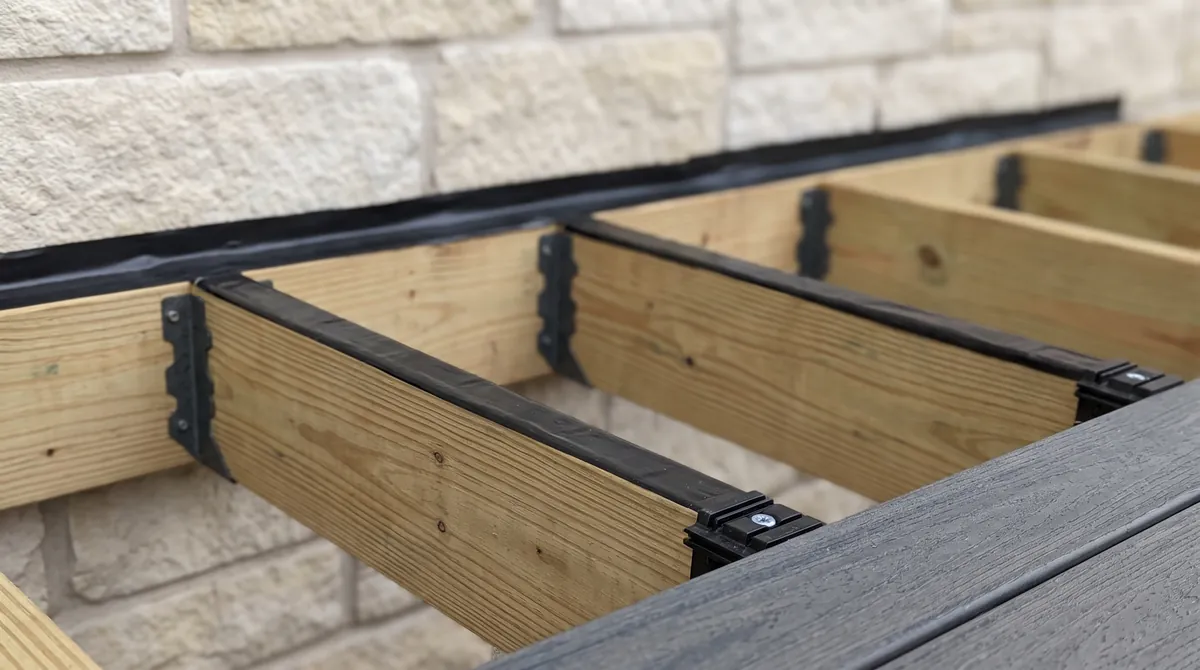
Bulverde has adopted the 2021 International Residential Code, so a new or rebuilt deck here has to meet it. In plain terms, the deck has to be anchored to the house so it holds against loads from above and from the side. If your old deck has pulled away from the wall, we fix that connection first.
Low ground, and what to check on your deck
Hard rain runs off fast around here and collects in the low corner of a yard, and a deck built there takes that water on its posts and footings. So we walk the yard before we draw anything and keep the deck on ground that stays dry. Here's what to check on a slow walk around the deck you've got:
- Look at the gap by the house wall; a gap that keeps growing means the deck is pulling away.
- Press a key into any dark board; if it sinks in, that's wood rot.
- Note every tree near where a new deck would go.
Frequently asked questions
My deck's pulling away from the house. Can you fix it?
Often, yes, if the frame behind it is still sound. A gap there usually means the connection at the house has worked loose, or the wood around it has rotted. We replace any rotted framing on that edge and tie the deck back the way the code expects. If the rot runs deep into the joists, a new deck makes more sense.
Got a rough plan in mind?
Give us rough answers to three choices, and we can price the real job. Composite decking or wood? One level, or steps that follow the ground down? Keep the old frame, or start fresh?
Give us a ring or send the form with those rough answers, and we'll call you back to talk them through. Asking for the quote costs you nothing.