
Deck Builders in Seguin
Soft boards, a wobbly railing, posts leaning in heavy clay? Our deck builders in Seguin check a failing wood deck from the posts up. That clay moves when it's wet, so a new deck here starts with its footings.
What does it take to turn a failing wood deck into a composite deck?
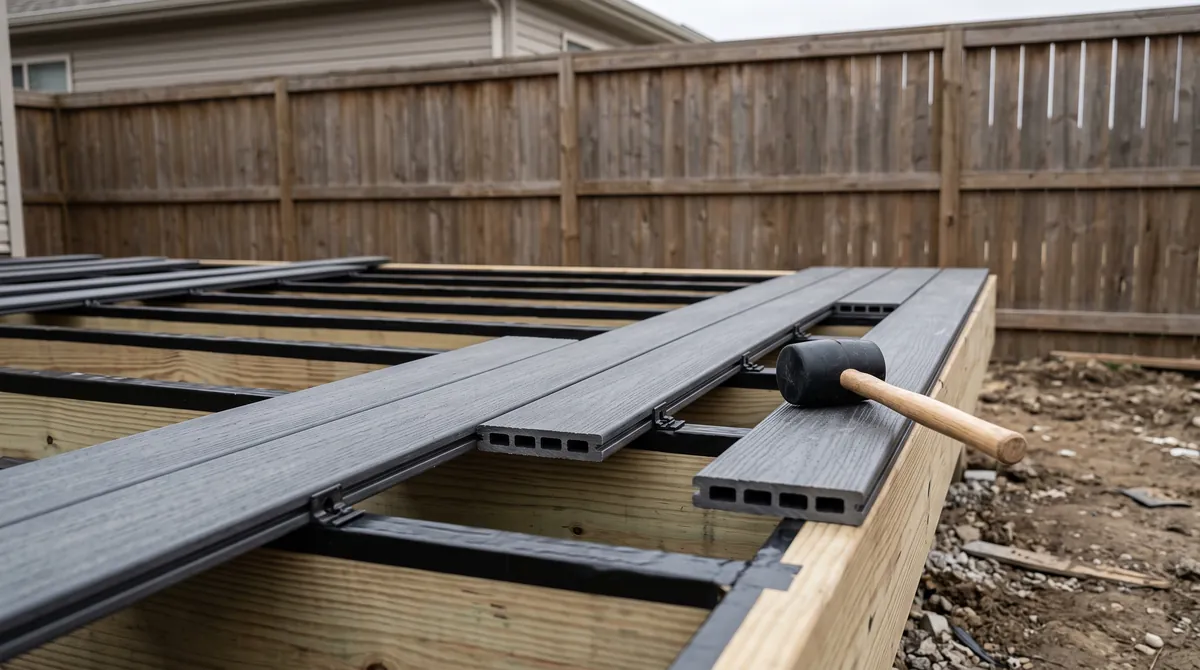
It starts underneath, where a failing wood deck hides its soft wood. If the frame is sound, it takes new composite decking; if it's gone soft, it comes out and we build a composite deck from the footings up. Either way, we plan it around your soil and where water runs on the lot.
Where on my lot should a new deck go?
Put it on the highest, driest part of the yard you can reach from the house. Watch where water runs and stands after a hard rain, and keep the posts out of those spots. Near a creek, stay well back from the bank. If part of the lot is in the floodplain, building on the higher side can save you a permit step.
Clay or sandy loam under the posts
Around Seguin we dig before we draw. Guadalupe County's ground runs from dark clay up toward the northwest to sandy loam down toward the southeast, so the first hole on your lot tells us which one we're working in. In clay we size the footings for ground that moves with the rain; in sandy loam we make sure every post stands on firm, packed ground.
The job your deck needs
Posts gone soft where the clay stays wet mean the Comal Decks crew will replace the deck from the footings up, on footings sized for ground that moves. On a lot with no deck yet, we plan a new composite deck for the dry, high side of the yard.
A solid frame under worn boards needs only a new top. That's resurfacing: the old boards come off, and new ones go down on the joists you already have. If the water came up around the posts, we inspect the deck before anyone walks on it.
Where the water goes, and the floodplain permit
Water decides where a deck can go here, too. If the Guadalupe River or the Walnut Branch runs near your yard, walk the bank after a hard rain and show us where it rose; that's where the footings can't go. If any part of the deck would land in the floodplain, you'll need the city's floodplain development permit before work starts there, and that can move the deck, so we find out where your lot sits first.
The July 5, 2025 flood put water into homes across the county. If it reached your deck, we look at three things before any new boards:
- posts that lean or sit in soft, washed-out ground
- joists that feel spongy or show a dark water line
- boards that lifted or pulled loose from their screws
What to look at before you call
If the water reached your yard, a short walk around the deck tells us most of what the job needs:
- Lean on the railing, and if it moves, the posts are part of the job.
- Walk the boards slowly and note any that bounce or feel soft.
- Look underneath for standing water or a muddy line left by a flood.
Photos of those three spots tell us a lot before we ever come out.
Frequently asked questions
My deck sat in floodwater. Is it safe to use?
Not until you've checked it. Stay off it if it leans, sags or moves when you step on it. If it feels solid, walk it slowly and press on any board that looks dark. Then look under it for posts standing in soft mud and debris jammed against the joists. A frame that comes through sound can often take new boards and keep going.
Want us to look at the frame?
A few photos do most of the talking. Take one of the whole deck, one from underneath, and one of the spot where water collects after rain. No deck yet? A shot from your back door shows us the yard.
Call us or send the form with those photos, and we'll call you back to talk through the lot. Your quote is free.