
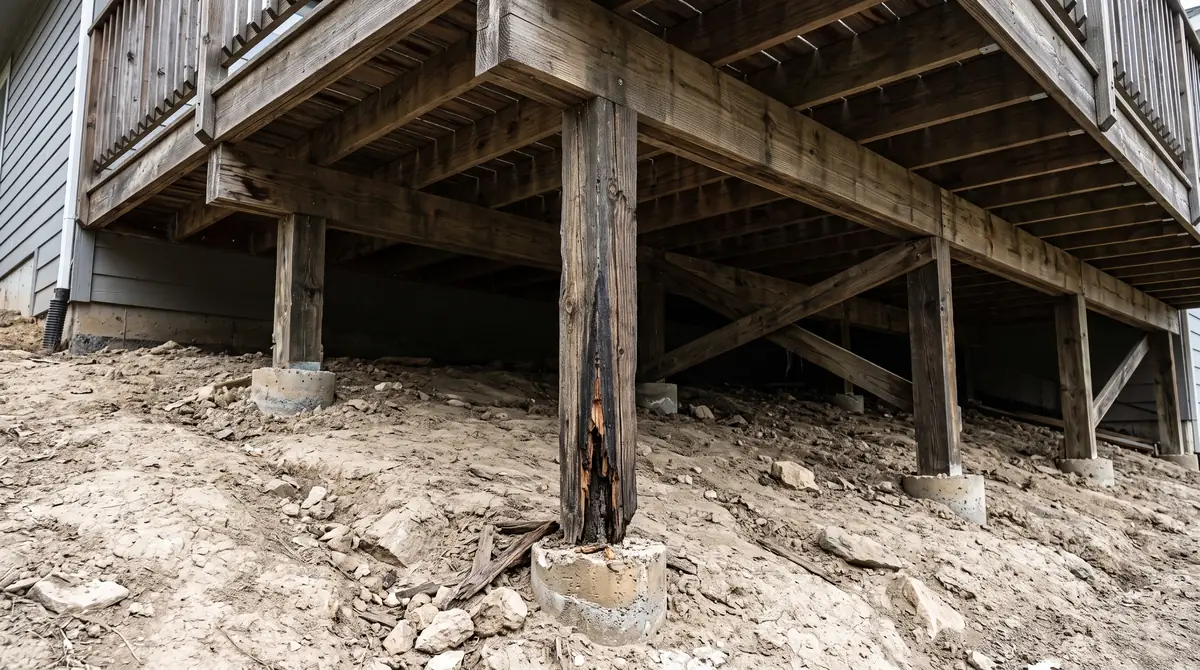
How a Deck Inspection Works in New Braunfels
Does your deck sway, sag or feel soft? We run a deck inspection anywhere in New Braunfels, railings down to footings, so you know what needs repair and if the frame can take composite boards. Asking for a quote costs nothing.
Do you inspect decks around New Braunfels?
Yes, we inspect decks in New Braunfels and the towns nearby. If you're unsure whether the deck is safe, we go through the ledger board, the posts, the joists and the railings. You come away knowing what needs repair before anyone picks up a saw.
Can my old frame take new composite boards?
Often, yes, once an inspection shows the frame is sound. We check the joists, beams, posts and ledger board for decay and loose connections. A sound frame can usually take composite decking as it stands. Soft wood in a few spots needs repair first, and rot through much of it means replacing it.
When to get your deck inspected
Movement is the big one. If your deck sways when you walk it, sags in the middle or has boards that feel soft, something underneath has changed. Other times to have us look:
- after high water has stood under the deck
- before you sell the house
- before new composite decking goes on an old frame
Creeks and rivers around here rise fast after a hard rain. If flood water has reached your deck, let us check the footings and the ledger board before anyone walks on it.
The last one surprises a lot of people. Fresh boards still sit on the old joists.
Is your deck in Seguin, Canyon Lake, Bulverde, Spring Branch or San Marcos? We inspect decks there too.
Stay off a deck that moves
Keep everyone off a deck that moves or sags until we've seen it. Movement often means a connection has let go, and you can't tell which one from up top. Clear chairs and grills off it, and move whatever's stored underneath, so we can see the frame when we get there.
What we check on your deck
We check the parts that carry the deck and the parts that keep you on it:
- the ledger board, where the deck ties into the house and a common spot for decks to fail
- the posts and joists under the deck, plus the beams and footings they sit on
- the flashing that carries water away from the ledger
- the fasteners and hardware, for rust and corrosion
- the guards, railings, handrails and stairs
On a raised deck or balcony, we look closer at the guards and where the frame meets the house. A fall from that height is a long one.
Fixing anything we find is deck repair, a separate job that's your call.
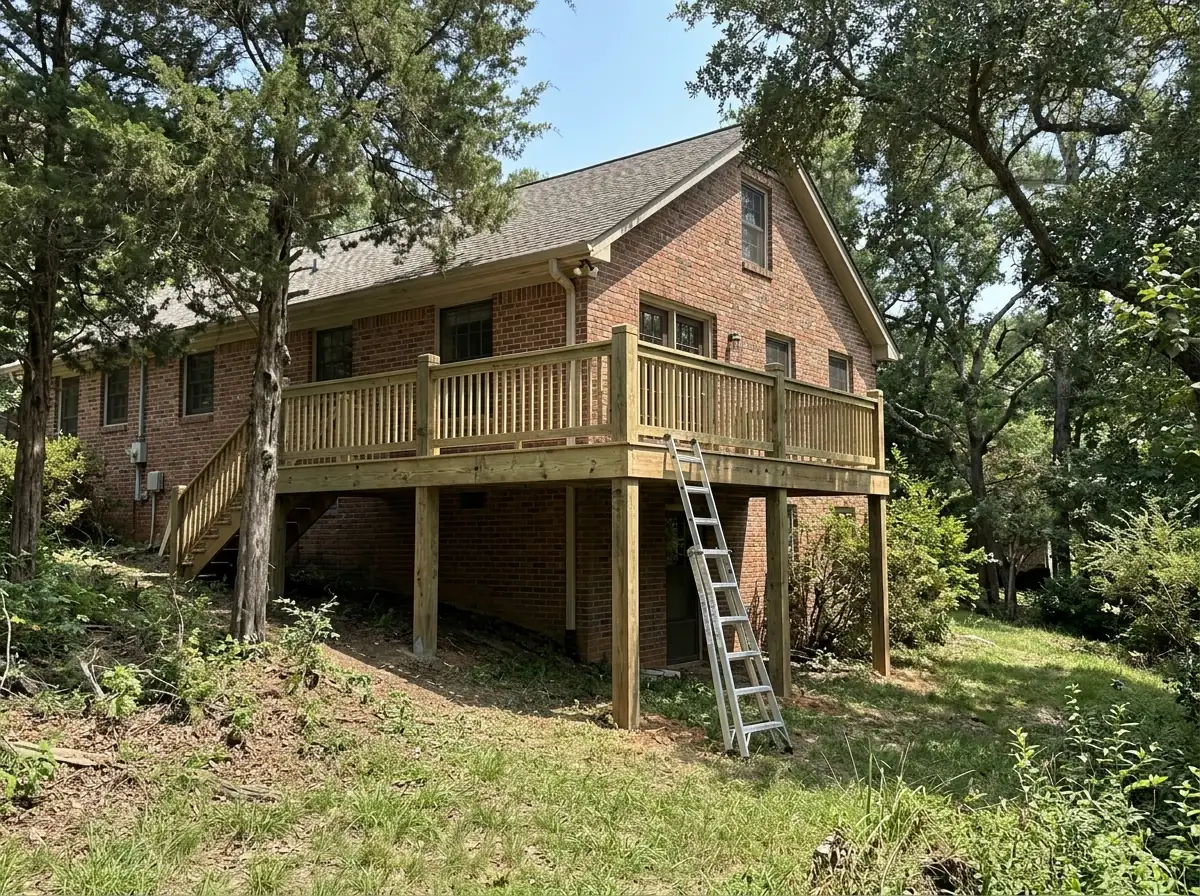
How we go over a deck, top to bottom
We start with what you can see and work down to what you can't:
- We push on the railings and handrails to be sure they're firmly held.
- We probe the wood with an ice pick or a screwdriver to find decay, mostly at post bases and joist ends.
- At the house, we make sure bolts or lag screws hold the ledger board, not nails.
- We look over each joist hanger and the lateral load connection.
- Any rusted or corroded fastener goes on the list to replace.
A nailed ledger is the first thing to fix. That joint holds the whole deck to the house. We go through NADRA's deck evaluation guide, its checklist for a yearly inspection, one part at a time.
What a structural check tells you
It tells you if the frame can stay. We follow the load down, from joists to beams, beams to posts and posts to footings, then finish at the ledger board where it meets the house. The boards matter less here than what holds them up. If the frame can't stay, you're looking at a new deck rather than new boards.
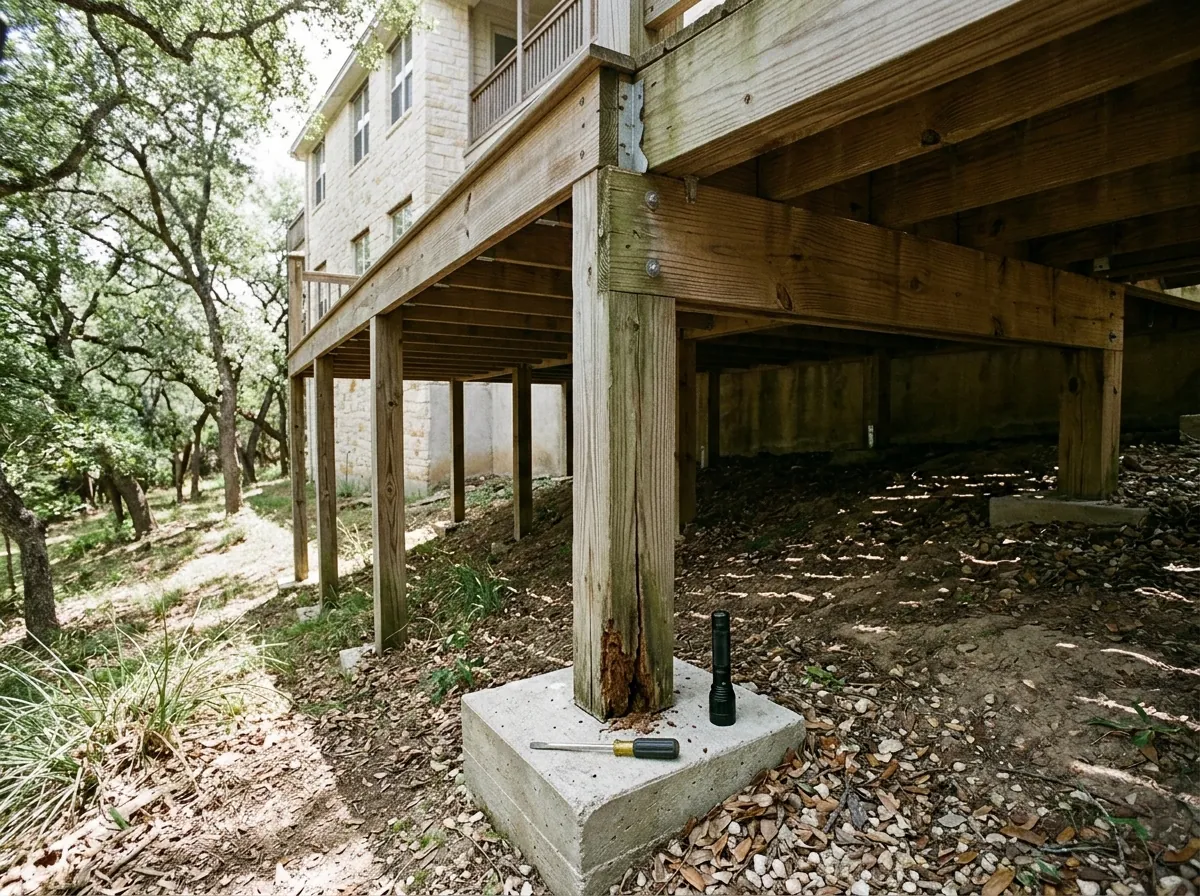
What makes an inspection cost more
The amount of deck to check, and how hard it is to reach. Look at yours:
- A bigger or higher deck has more frame to cover.
- A low deck with little room underneath takes longer than one you can walk under.
- Stairs and a balcony add more parts to check.
- A deck on a slope can be harder to get under.
Clear the way underneath before we come, and the visit goes faster.
Frequently asked questions
How much does a deck inspection cost?
What you pay comes down to the size of the deck and how easy it is to get under it. Asking us for a quote is free, and you'll know the price before we start. It costs less than fixing the wrong thing: boards laid on a failing frame get torn off again, so checking first keeps you from paying twice.
Is this the same as a city inspection?
No. Ours is a condition check for you. It tells you what shape the deck is in and what needs fixing. It isn't a city inspection or an approval of any kind. Use it to decide on repairs, or to know where the deck stands before you sell your home or put new boards on it.
How often should I have my deck checked?
Once a year is the rhythm to aim for. You can do your own version: pick a month, walk the deck, test the railings and look underneath, starting with what you can see and working down to what you can't. An older deck, or one that's sat in high water, deserves a look in between.
What happens if you find rot?
A few rotten boards are usually a simple repair or a board swap. Rot in the frame is a bigger job. Wood decay in the joists, posts or ledger board can mean replacing those parts, and if it runs through much of the frame, replacing the deck.
Want your deck checked?
A few minutes with a flashlight makes our visit count for more. Before you call, look for:
- nails, stains or gaps where the deck meets the house wall
- soft or dark wood at the foot of each post
- any railing that shifts when you lean on it
- how much room there is to get underneath
Tell us what you find when you ask Comal Decks for a free quote.
Call or fill in the form, and we'll call you back to set up a look at the deck. Asking for the quote costs nothing.