
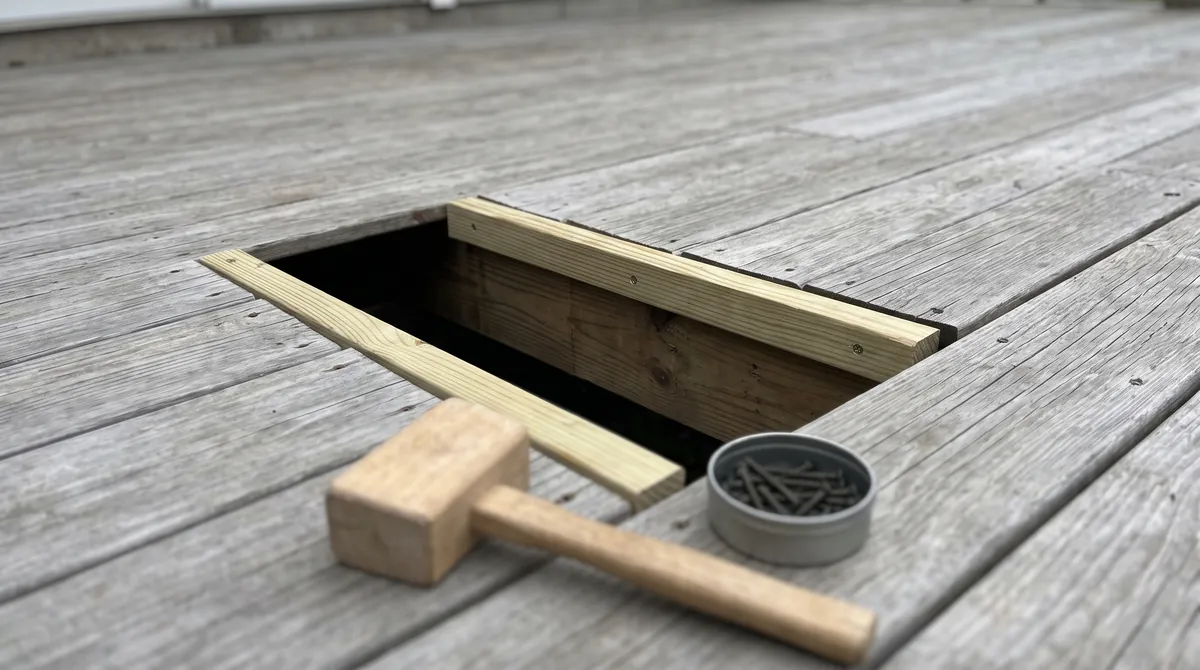
Deck Repair in New Braunfels
A board gone soft underfoot, or a stair that wobbles? We take on deck repair all over New Braunfels: we cut out the rot, refasten loose boards and keep the good framing, leaving you a sound deck. The quote is free.
Can you fix rotted boards and a stair that wobbles?
Yes, both are repairs: the rotted boards come out, and the stair gets fastened tight to the frame again. We probe soft wood with an ice pick or screwdriver before we cut, because rot can run deeper than it looks. On the stair, we check where the stringers meet the deck and swap any rusted fasteners. You're left with a sound deck.
Should I stay off a deck with soft spots?
Yes, keep off the soft spots until they're fixed. A board that gives underfoot can sit over a joist that's rotting too. Block off a stair that moves, and keep heavy things like grills and planters off the soft area. Then look underneath for dark or crumbly wood.
Signs it's time to fix your deck
Most signs show up under your feet before you see them. Here's what brings people to Comal Decks:
- a board that's soft or gives underfoot
- boards that rock when you step on them
- a stair that moves when you climb it
- a joist underneath that looks dark or crumbly
Soft wood is usually rot. Caught early, in a few spots, it's a repair.
How we work through a repair
We start at the damage and work outward, in this order:
- We run the pick test on each soft spot, pushing a screwdriver or ice pick into the wood to see how far the decay goes.
- We cut out the decayed pieces and fit preservative-treated lumber in their place.
- We swap rusted or corroded fasteners and hangers for new ones.
- We refasten the loose boards.
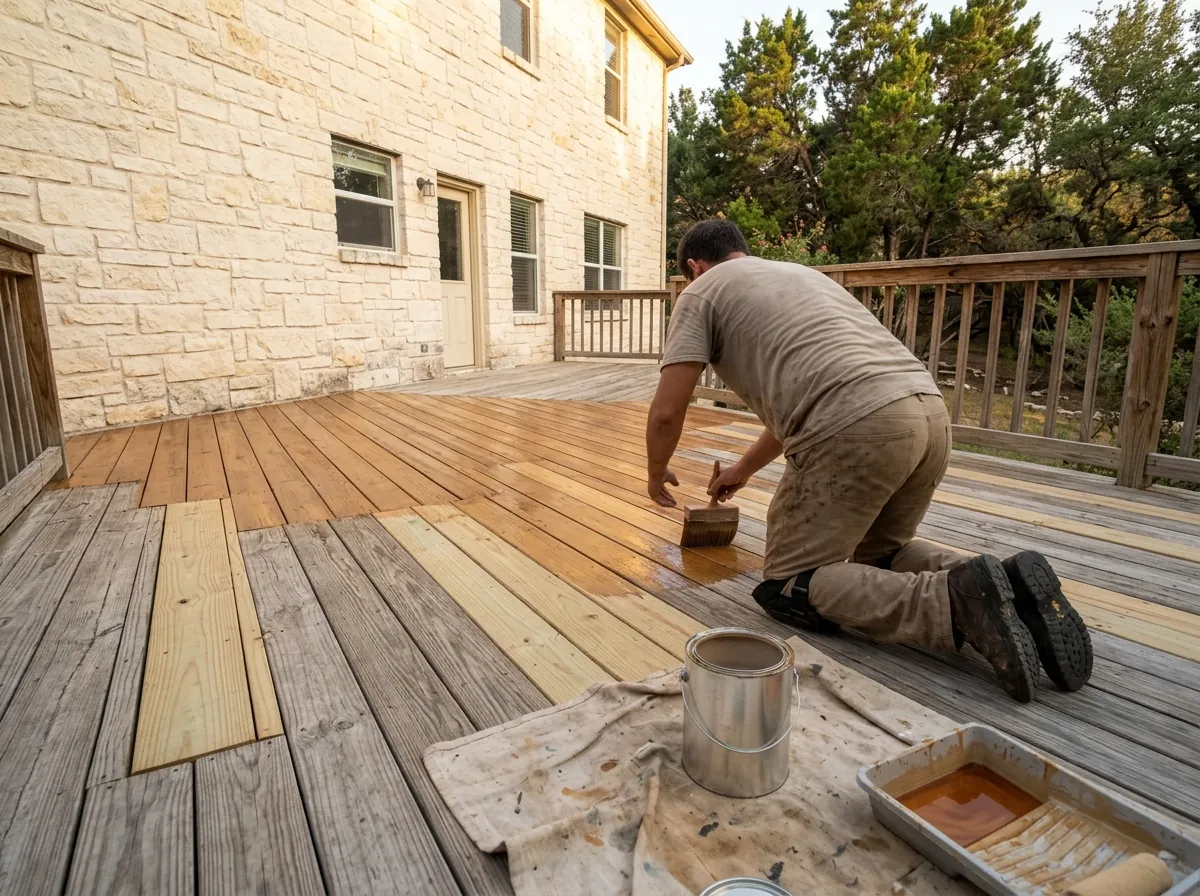
- We put a wood deck finish on the new wood.
How far the pick sinks in sets the size of the job: rot that stops at the board is a quick fix, and rot that reaches a joist means more of the deck comes apart.
When a joist has gone bad
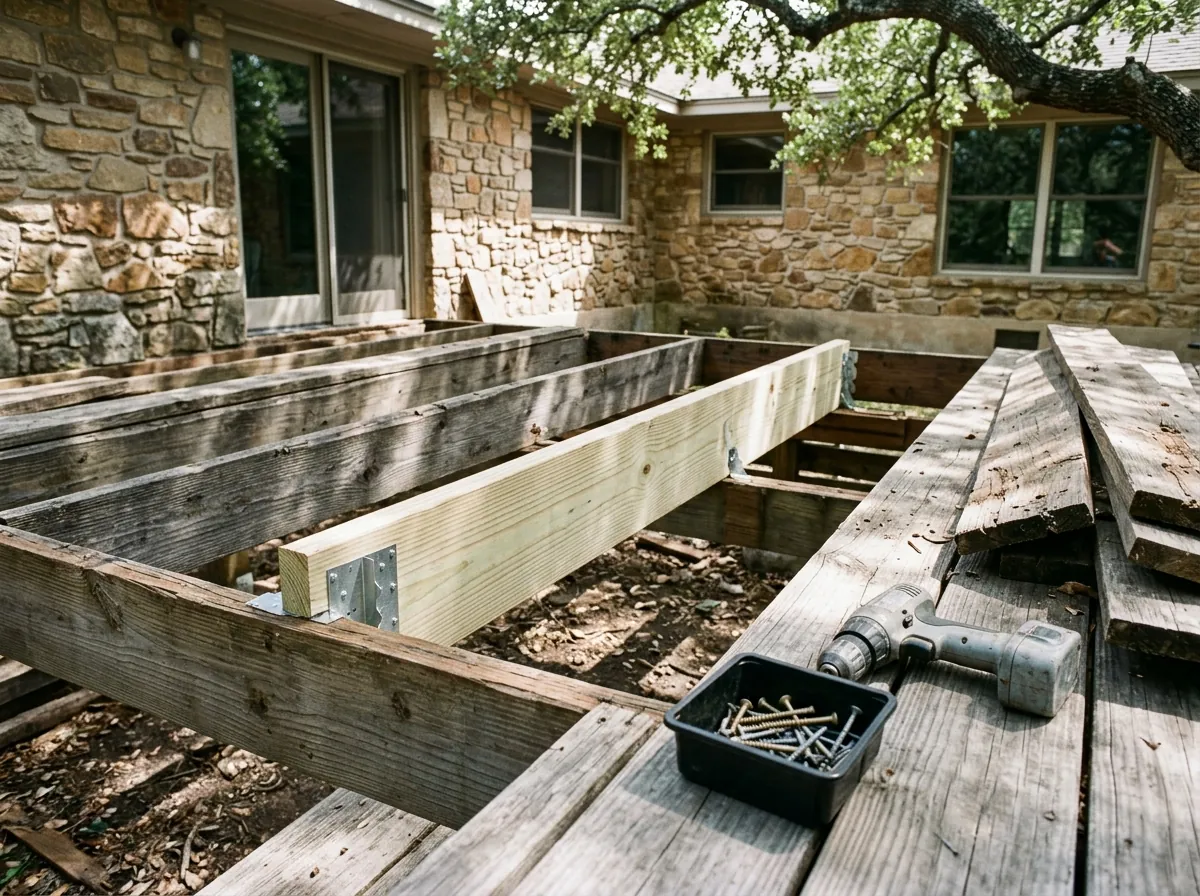
We replace a bad joist rather than patch it. The old one comes out, and the new one sits in a new hanger at the ledger. We give the joists on either side the same pick test and pull any rusty hangers nearby.
One soft joist is a repair. When several joists have gone soft, the frame itself is failing.
What we fix on a repair job
We fix the parts that failed, not the whole deck:
- cutting out decayed boards and framing
- refastening loose boards
- steadying a stair that's started to move
- replacing rusted fasteners and joist hangers
- redoing the ledger flashing that keeps water off the house
We take on composite deck repair too, usually one cracked or lifting board at a time.
When decay runs through most of the frame, you're into deck replacement. If the railing shifts under your weight, that's deck railing installation.
What drives the price of a repair
Two things move the cost of a repair the most: how far the damage reaches, and how tough the spot is to get at. The layer that failed sets the scale:
- loose or cracked boards are surface work
- rusted fasteners and hangers sit a step down, at the connections
- decayed joists or a rotting ledger board are the frame itself, and they cost the most to put right
The height of the deck and the room to work under it matter too. So does what the new boards have to match, wood or composite.
That's also why repair prices vary so much. The same soft board can hide rot that stops at the surface or rot that's reached the joist. Nobody can tell which from above, so we probe the wood before we price the job.
Then you can decide what gets fixed now and what can wait.
Does a deck repair need a permit?
Inside the city limits, yes. The City of New Braunfels asks for a permit to repair a structure, not only to build one, and that holds when you do the work yourself.
So find out from the city before a joist or the ledger board comes out, and before you order lumber. If the repair also makes the deck bigger, that's more than a repair to the city. Give the city the job as it really is:
- which boards, joists or stair parts are coming out
- if the ledger board is part of it
- how high the deck sits at its highest point
- the material going back in, wood or composite
Outside the city limits, the rules follow the place. Spring Branch's city strip doesn't issue building or development permits. Around Canyon Lake and the rest of unincorporated Comal County, a repair that turns into a new deck needs the county's floodplain development permit. In Seguin, Bulverde or San Marcos, we check that city's rules before the old wood comes out.
Repairing and refinishing a wood deck
A wood deck repair comes in two parts: the fix, then the finish. Once the new wood is in, we put a wood deck finish over the whole deck, not just the patch. That way the new boards and the old ones weather together instead of standing out.
Frequently asked questions
What is the average cost to repair a deck?
Deck repair runs from about $300 to $3,000 or more. The number of separate spots moves a repair's price, since each one means opening up the deck again. A stair that moves needs its own fix at the stringers. Redoing the ledger flashing means lifting the boards along the house to reach it. A fresh finish over the whole wood deck, not just the new boards, adds to the total too. You can note all of that before you call.
Is it better to repair or replace a deck?
Repair is better when the trouble sits in a few places and the frame is solid. Replacement starts to win when problems keep turning up in new spots, or the whole deck sways when you walk on it. If you're worn out from keeping up a wood finish, a replacement is also your chance to go composite.
How do you fix rotted wood on a deck?
Find where the rot ends first. Work a screwdriver or ice pick outward from the soft area until it meets firm wood. We cut the rotted part back past that point, fit treated lumber, then finish it. If the rot reaches a joist or the ledger board, it's a frame repair, and that whole joist comes out.
Can a handyman repair a deck?
For small fixes, often. Refastening a loose board or swapping one cracked board is surface work. Joists, hangers and the ledger board are different, because they hold the deck up. For those, you want someone who frames decks, and a word with your city or county about a permit before anything comes apart.
Can you repair composite decking?
Yes, usually one board at a time. A loose composite board is usually refastened in place once we've checked the joist below; a cracked one comes out, and a matching one goes in, fastened like the rest. The hard part is matching boards that have been down for years, so keep any spares. Composite changes the boards, not the frame, so we still probe the wood underneath for rot.
Need a deck repaired?
Before you call, note what you've found:
- where the soft spots are
- which boards are loose
- any rust on fasteners or hangers
- a photo of the worst spot
Tell us what you've found by phone or through the form, and we'll ring you back to plan the fix. Getting a quote won't cost you anything.