
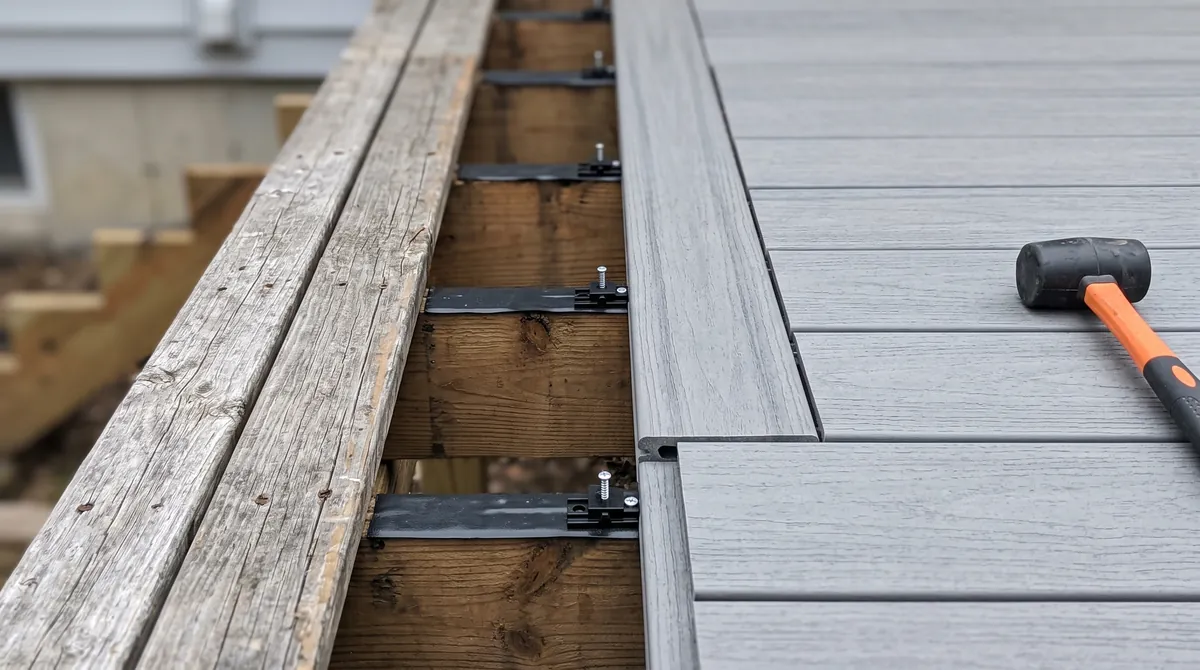
Deck Replacement in New Braunfels
Rot in the joists and posts, and a deck that sways underfoot? We do full deck replacement in New Braunfels: we tear out the old deck, keep sound footings and build a new deck in composite or wood. Your quote costs nothing.
Where do I start with replacing an old deck?
Start by taking photos of the boards, the posts near the ground and the underside. Then call or send the form. Our first job is probing the old frame. A rotting frame means a new deck from the footings up. Sound joists and footings can stay under new boards, and that keeps the cost down.
Can I keep my old footings under a new deck?
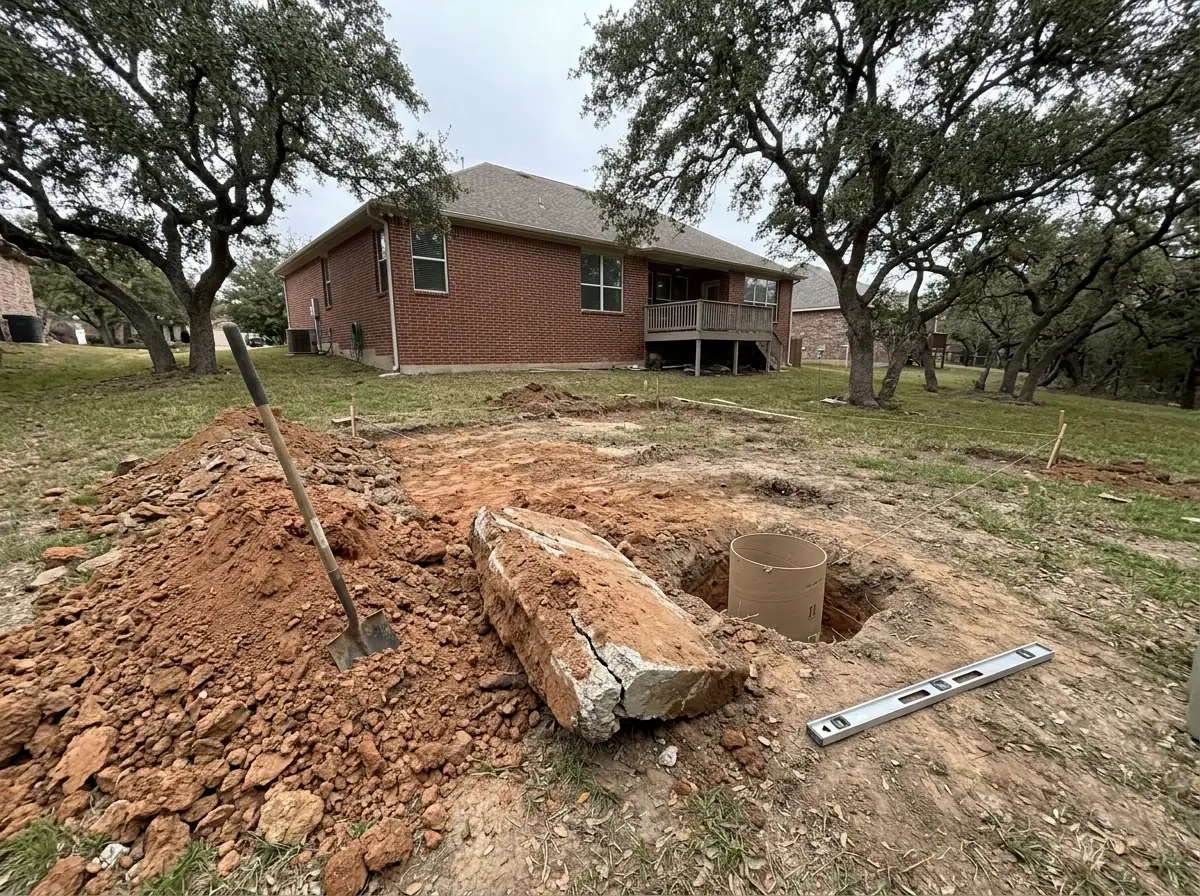
Sometimes, and we check every one before we lay out the new frame. A footing that sits level and solid, right where a new post will land, can stay. One that has sunk, cracked or sits in the wrong spot comes out. Good footings you keep mean less digging, so they're worth a close look once the old deck is off.
When it's time to replace the deck
It's time when the frame has failed, not just the boards. You can spot the same signs we look for at Comal Decks:
- spongy boards, with soft joists under them
- wood rot at the base of the posts
- a ledger board that's pulling away from the house
- a deck that sways when you walk on it
One of these means the frame needs a closer look. Two or more usually means it's time to start over.
What the full job includes
We take on the whole deck, top to bottom:
- tearing out the old deck and hauling it away
- a hard look at the old footings, since some can stay
- new framing, keeping any parts of the old frame that are still sound
- new boards, guards and stairs
Is only the surface worn, with a solid frame under it? Then look at deck resurfacing or deck board replacement, both smaller jobs.
How we take the old deck out and build the new one
Here's the order we work in:
- We test the joists, posts and ledger board for decay, using a screwdriver or ice pick.
- We pull the boards and railing off so the whole frame is in plain view.
- We keep the footings that sit solid and set new ones where the old ones can't carry the new deck.
- We fasten the ledger board, where the deck meets the house, with lag screws and flash it to keep water out, adding lateral load connections if the design needs them.
- We rebuild any posts, beams and joists that have failed, hanging the joists in joist hangers.
- We lay the new boards with an even gap, then put on the guards, stairs and handrail.
- We check it: every rail and handrail firmly held, and the deck solid underfoot.
The probing shows us which parts of the old frame can carry a new deck and which can't.
The ground under the new footings
Old footings show what the ground did to the last deck. One that tipped or cracked usually sat in clay that swells when it's wet and shrinks when it dries, and where limestone sits just under the topsoil, the footing work changes again. So we plan the new footings for the ground your lot has, not for the deck that stood there before.
Replacing a deck in Seguin, Canyon Lake, Bulverde, Spring Branch or San Marcos instead? We do that work there too.
What drives the price
The biggest cost question is how much of the old frame can stay. If the footings and joists are sound, you're mostly paying for the tear-out, new boards and new railing. If wood rot has reached the frame, you're paying for a whole new deck and for hauling the old one away.
After that, these push the price up or down:
- size and height, since a big, high deck takes more to tear out and more to rebuild
- composite or wood boards
- how much railing and how many stairs
- any permit the job needs
The frame is the part we have to see before we can price the job. The board material, the railing style and the stairs are choices you can settle after that, once you know how much of the old deck can stay.
Sticking with wood
A new wood deck is still a good pick. We frame it in preservative-treated lumber and lay wood boards on top. Price wood and composite side by side to see the trade-off. Wood costs less up front, and composite asks less of you after.
Do the stairs get replaced too?
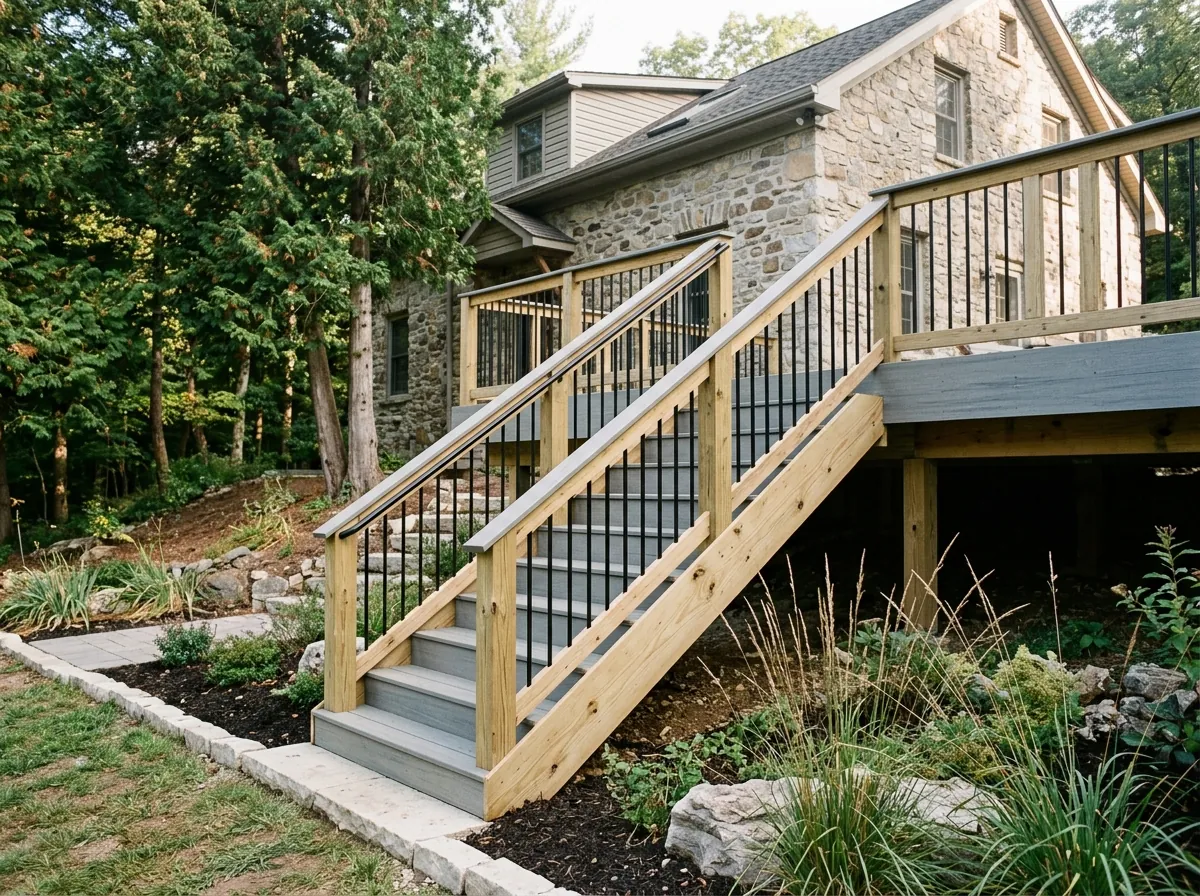
They usually do, along with the deck. That means new stair stringers, treads in the new board material, and a handrail you can grip all the way down. Guards run along any open side of the stairs.
If the stairs move when you climb them, stay off them now. Don't wait for the rest of the job.
Should new railing go on at the same time?
Usually, yes. New railing with the new deck lets fresh structural rail posts go into the new frame, with post sleeves over them. Then you pick aluminum railing, vinyl railing or composite railing.
What decides how long it takes
What's under the old boards sets the pace. A frame that can stay keeps the job short. One that needs rebuilding adds framing time, and any permit the job needs adds time of its own.
If the deck isn't safe now, keep everyone off it until the work starts.
Frequently asked questions
How much should a deck cost to replace?
Deck replacement runs from about $6,000 to $35,000 or more, and the tear-out adds to it. The price turns on size, boards and whether the old frame suits what goes on top. A frame built for wood often has its joists too far apart for composite decking, which puts extra joists or a rebuilt frame in the price. Old footings that have sunk, cracked or sit in the wrong spot for the new posts mean new footings too.
Is it cheaper to repair or replace a deck?
Repair costs less while the damage stays in the boards or a few parts and the frame holds. Once the joists, posts or ledger board start failing, you'd be paying to patch a deck that's coming apart underneath. If something new breaks every season, replacing is the better use of your money.
How do you replace composite decking?
We take the worn composite decking off first, which opens up the frame for a look. We replace any decayed joist or post and check the spacing for the new boards. With the frame sound, the new composite decking goes down with even gaps between boards, and then the guards and stairs go back on.
Ready to replace your old deck?
Tell us what you've spotted, like spongy boards or a post gone soft at the base, and ask us for a free quote. Before you call, jot down a few things about the deck:
- roughly how big and how high it is
- composite or wood for the new boards
- how many stairs it has and how much railing runs around it
Call us or use the form, and we'll call you back about the old deck. Photos of the posts near the ground help most.