
Deck Board Replacement in New Braunfels
A cracked board, or a soft spot that gives underfoot? Our crew does deck board replacement in New Braunfels, swapping bad boards for new wood or composite and checking the joists under them, for a safe, even surface. Getting a quote is free.
Where do you replace deck boards around New Braunfels?
We replace cracked or soft boards, and refasten loose boards, on decks in New Braunfels and the towns nearby. We take out only the bad boards and leave the sound ones where they are. Then we fasten the new boards to match the rest, so you get a safe, even surface back without redoing the whole deck.
When it's just a few bad boards
That's a board job, not a rebuild. It's small, contained work, and at Comal Decks we take it on alongside our bigger repairs. Walk your deck and look for:
- a crack running along a board or through its end
- a soft spot that gives when you step on it
- a board that's lifted or rocks on its fasteners
- a board cupped enough to catch a toe
A loose board often just needs refastening once we've checked its joist. A handful of cracked or soft ones calls for new boards. Most of the deck? Then resurfacing makes more sense.
What to do until the new boards go in
Keep everyone off a soft board until it's replaced, kids and guests included. Set a chair or a planter over the spot so nobody steps there out of habit. If you can see under the deck, look at the joist below it. A soft board on a firm joist just waits for its match, but a soft joist means framing work comes first.
How we swap out a bad board
Four steps, one board at a time:
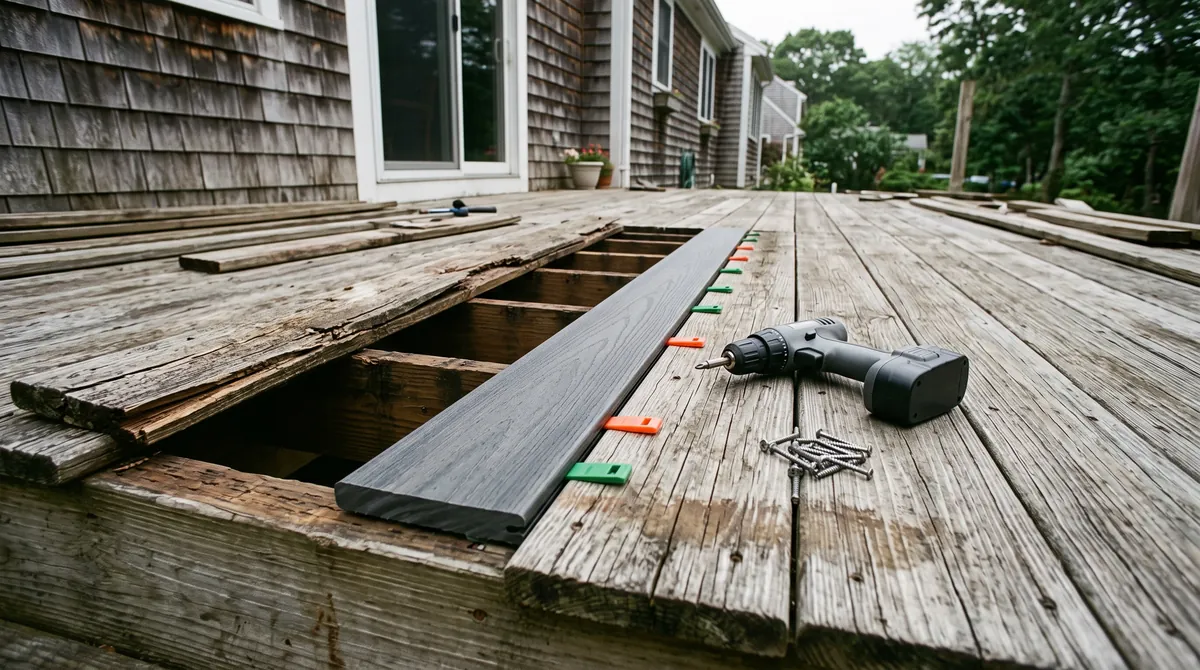
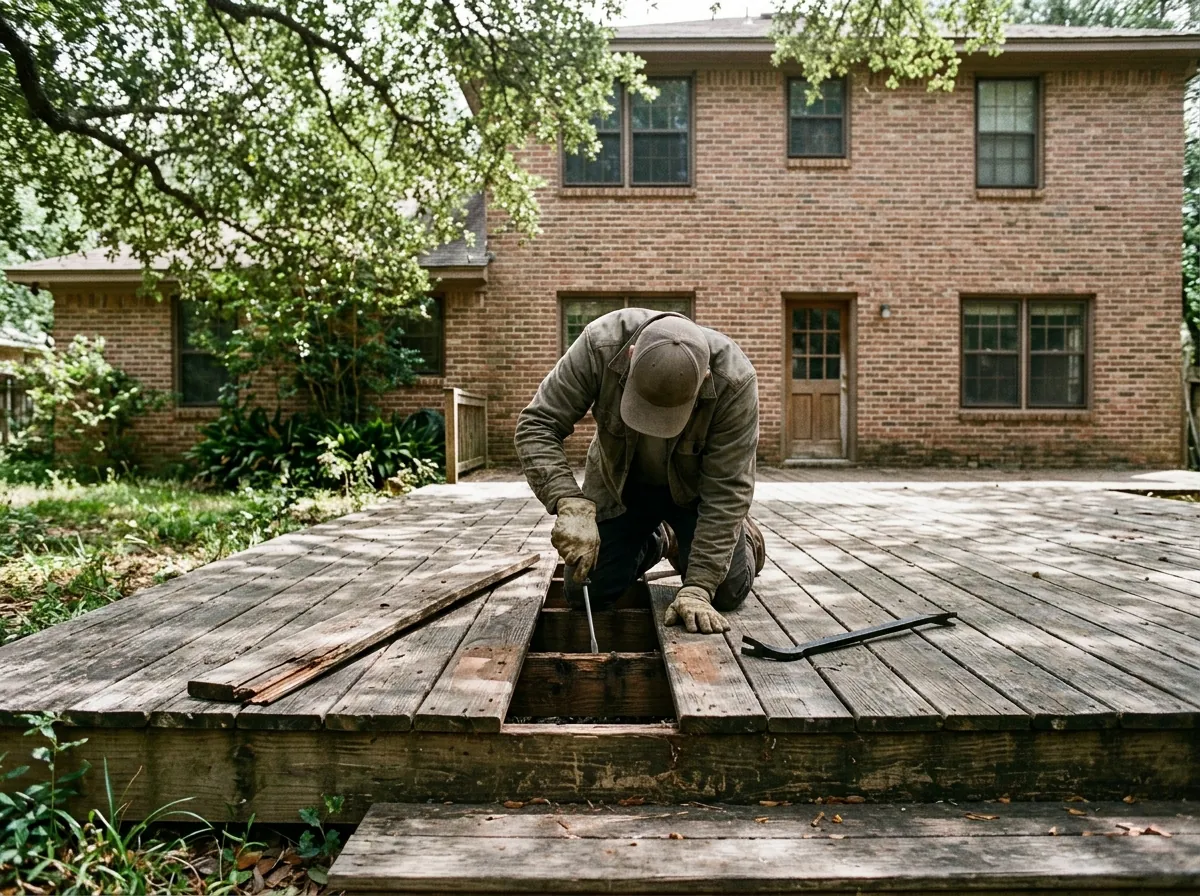
- We back out the face screws or release the hidden fastener clips, then lift the damaged board.
- We push a screwdriver or ice pick into the joist below to find any soft wood.
- We check the joist spacing against the new board, which matters most when you're switching materials.
- We set the new board with deck board spacers, so the gaps stay even and the boards don't buckle.
Last, we walk every new board to make sure it sits flat.
What's included when we swap boards
The bad boards and the wood right under them. We lift only the boards that failed and leave their neighbors alone. Before anything new goes down, we look at the joists those boards sat on. Then the new boards go in, fastened and gapped like the rest.
A failing frame isn't part of it. When most of the boards are worn, the better fit is deck resurfacing; when the joists themselves are gone, it's deck replacement.
Switching from wood boards to composite
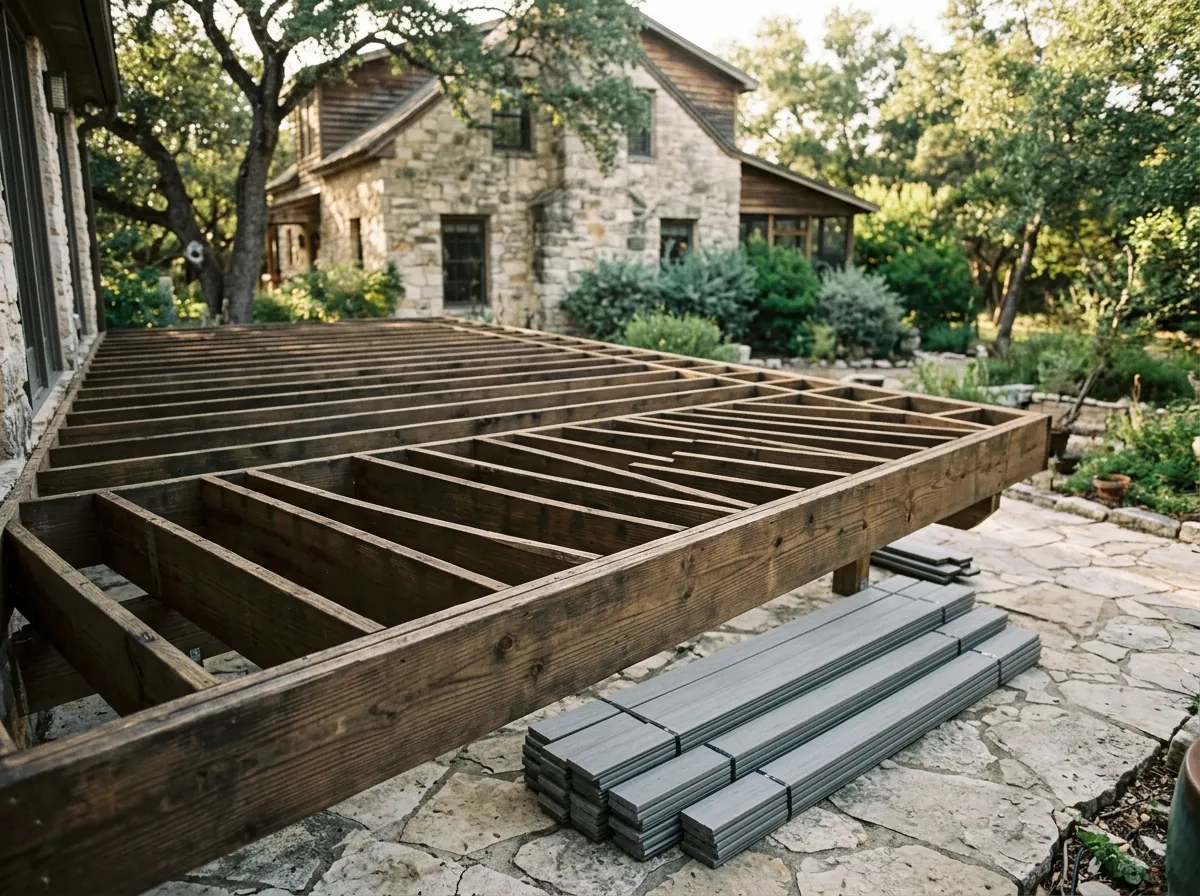
Replacing wood boards with composite changes what the joists have to do. Under composite decking, joists generally sit no more than 16 inches apart, center to center, and a frame built for wood may be wider. We measure from the center of one joist to the next before you commit to the switch.
Composite set among weathered wood won't match, either. A few boards can go in as a patch. If that would bother you, switch the whole surface.
Keeping it wood
New wood boards start out lighter than the weathered boards around them, so a wood deck finish over the whole deck helps them match.
Picking boards for a deck in full sun
On a deck in full afternoon sun, the new board's color matters as much as the match. Darker boards run hotter underfoot than light ones, so where people walk barefoot a lighter board can be worth it. If the swap is a patch, we match the old color as closely as the product line allows.
Swapping boards in Seguin, Canyon Lake, Bulverde, Spring Branch or San Marcos? We work there as well.
What changes the price
Mostly things you can see from above, plus one you can't:
- how many boards need to go
- wood or composite
- how hard the color and profile are to match
- clips or face screws
- any joist under them that turns out soft
That last one only shows once the boards are up. Past a point, the count stops adding up, too. As it climbs toward most of the deck, the cost nears a full resurfacing. That gets you all new boards and no hunt for a match.
Frequently asked questions
Can you replace just one bad board?
Yes, as long as the joist under it is sound. Once the board's up, we push a screwdriver into the joist where it sat. Firm wood means a new board can go straight down, fastened like its neighbors. If the joist is soft, we fix it first, or the new board ends up sitting on the same problem.
What is the typical cost of replacing deck boards?
It turns on where the boards sit more than on how many there are. Three boards side by side mean one opening and one fitting job, while the same three scattered across the deck mean three. Matching an older color can narrow you to one product line, while switching the whole surface to composite opens every line back up.
Can I just flip over my deck boards instead of replacing them?
Sometimes, with wood. If a board is weathered on its face but sound all the way through, you can turn it over, as long as its face screws come out cleanly. Cupped, cracked or soft boards won't work, since the damage goes through. Composite usually isn't one to flip: most boards have their finished walking face on top only.
How do you replace composite deck boards?
Lift the old one, then set the new one exactly like its neighbors. If the deck uses hidden fastener clips, the clips come out with the old board, and new clips set the gap on the new one for you. With face screws, you back them out, then measure the gap by hand. Either way, check the joist below before the new board goes down.
Got a few boards to swap?
Two photos and a count go a long way:
- a close-up of the worst board
- a wide shot of the deck, so we can match the color
- how many boards look bad, and where they are
- the fasteners you can see, screw heads or none
Add anything you've felt underfoot, like a spot that gives or a board that rocks. Pricing the swap costs you nothing.
Send the form with your board count or give us a call, and we'll ring you back about the swap. A close-up of the worst board helps.