
Does Your Deck Need an Inspection? What to Know in New Braunfels
Inside the city limits, the City of New Braunfels handles inspections of work being built. A deck that's already standing still deserves a condition check now and then. Get one when the deck sways or bounces, a board goes soft, or the ledger board looks stained or loose.
Most people only think about a deck inspection when a board gives underfoot, or when a buyer's inspector points at the ledger. By then, whatever's wrong has often been out of sight for a while.
If you're planning new work, it starts with the city's building permit application. For a deck that's stood for years, it pays to keep your own eye on it.
Do decks need to be inspected?
Yes. An older deck's weak spots sit where nobody looks: the ledger board at the house, and the posts and joists underneath. Trouble there stays hidden while the surface boards still look fine, so a condition check finds it before something gives.
Why is the ledger board the first thing checked on a deck?
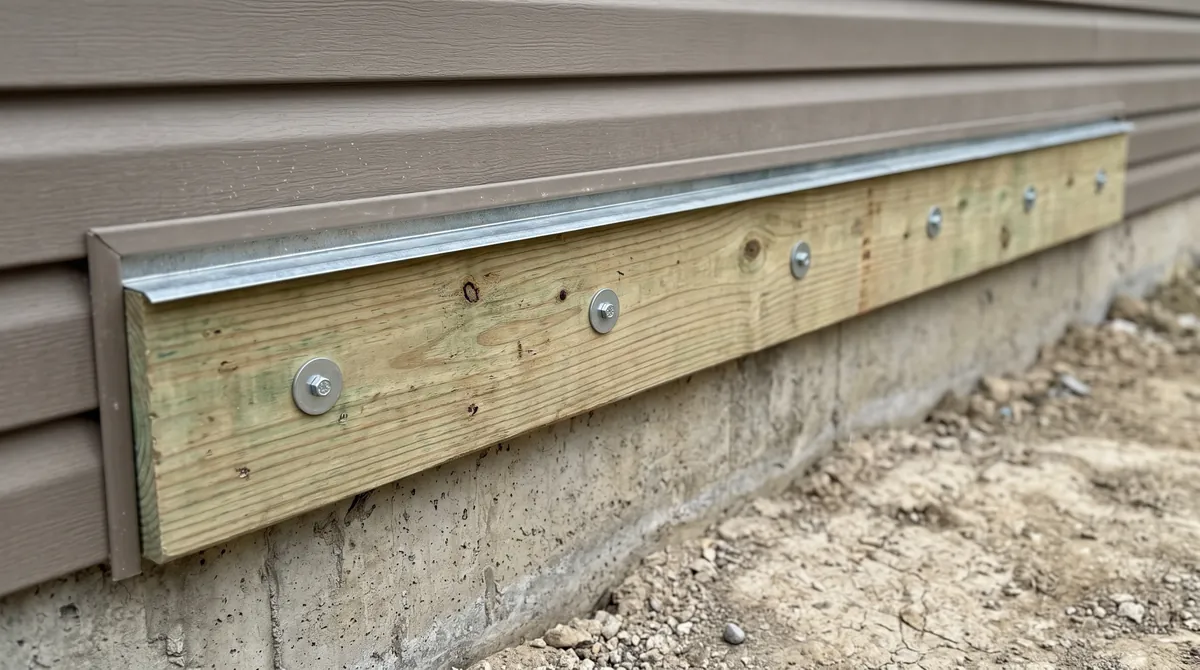
The ledger board is the joint that holds a deck to the house, so it's where a check begins. A ledger fixed with nails instead of bolts or lag screws can fail while the surface still looks sound. So can one missing the flashing that keeps water off it. That's why an inspection here starts at the house wall and works outward.
Why does flashing matter at the ledger board?
Flashing keeps water away from the ledger board, the connection that holds the deck to the house. Without it, water can sit behind the ledger, where rot and corroded fasteners weaken the joint. On an older deck, an inspection that finds it missing has found something to fix early.
What does a lateral load connection do on a deck?
A lateral load connection ties the deck to the house so it resists sideways movement, not just downward weight. Without one, the ledger's fasteners take that pull on their own, and the deck can work loose from the wall over the years. An older deck may not have one, so an inspection looks for it.
Why do older decks fail without much warning?
Older decks tend to fail where nobody looks: at the house and underneath. The ledger board is where the deck attaches to the house, and it's a common source of deck failure. A ledger held with nails, missing its flashing, or fastened with corroded hardware can let go while the boards on the surface still look fine.
The way decks meet the house has changed over the years, too. Newer decks are usually tied to the house so they resist sideways pull as well as downward weight. An older deck may not have that connection at all, so its age tells you something about what's holding it to the house.
Which parts does a structural deck check cover?
A structural check follows the load, from the house down to the ground. These are the parts it usually covers:
- The ledger board, which should be bolted or lag-screwed to the house's floor structure, never nailed, with flashing to steer water off it.
- The lateral load connection that holds the deck against sideways movement, and the joist hangers that carry the joists.
- The joists, beams and posts, down to the footings they stand on.
- The guards, handrails and stairs, checked to be sure they're firmly held in place.
We probe the wood with a screwdriver or an ice pick to find soft, decayed spots. We mark rusted or corroded fasteners for replacing. On a yearly check, we work through NADRA's deck evaluation guide, a checklist written for deck pros.
You can do part of this yourself with a tape measure. New Braunfels has adopted the 2021 building codes, and under them any deck standing 30 inches or more above grade gets a guard no lower than 36 inches, with no gap a 4-inch sphere could slip through. The handrail's grip should land 34 to 38 inches above the tread nosing.
When should an older deck get checked?
For a deck that's simply getting older, pick a good moment yourself:
- after high water or a hard storm
- before you sell your home, or before you buy one with a deck
- before a season of heavy use
- before new boards go onto an old frame
One sign doesn't wait. If the deck moves, sags or pulls away from the house, stay off it until it's been checked.
A check also comes before money goes into the surface. Deck resurfacing replaces the walking surface and railings and keeps the frame, so it only makes sense when the frame is sound. Composite decking over decayed joists or a weak ledger just hides the trouble. The new boards would have to come back up to fix it.
Should you have your deck checked this year?
If your deck is older, has sat through high water, or has never had its ledger looked at, get a structural check. It tells you what the deck needs before something gives. If it passes, you'll also know the frame can take new boards.
To get one, start with deck inspection. For repair, replacement or a new deck, start from Comal Decks.
Frequently asked questions
How often should I have an older deck checked?
Once a year is the usual rhythm, and sooner after high water, a big storm or a soft spot underfoot. Start at the ledger board, where the deck meets the house, then work down through the frame to the posts and footings, the same order every time so nothing gets skipped.
Is a nailed ledger board a problem?
It is. A ledger is meant to be positively connected to the house with bolts or lag screws, not nails. It's the joint that holds the deck to the building. If you see nail heads along the ledger and no bolts, put that first in your notes for whoever checks it.
What should I look at before I call about an inspection?
Walk the deck, then look underneath if you can get there. Note soft boards and any railing or handrail that moves when you lean on it. Look for rusted fasteners and a gap opening where the deck meets the house. After high water, add the posts and footings, with a photo of each problem you find.
Want your deck checked?
Call or fill in the form, and we'll call you back to set up a look at the deck. Asking for the quote costs nothing.